Wednesday, November 6, 2013

Transcending Borders, (Re) defining Lines


Acclaimed printer maker and sculptor Elizabeth Catlett was born on April 15, 1915, in Washington, D.C. Growing up with grandparents who had been slaves, she was very aware of the injustices against black women. She attended Lucretia Mott Elementary School, Dunbar High School and then Howard University School of Art where she graduated cum laude in 1936. After she became the first student to earn an MFA degree in sculpture from the University of Iowa in 1940, she studied ceramics at the Art Institute of Chicago and later in New York she studied lithography at the Art Students League.

In 1946, Catlett accepted an invitation to work in Mexico City’s Taller de Grafica Popular, a collective graphic arts and mural workshop. There she cultivated the theme for her work, the African American woman. In 1947, she produced her first major show “I am a Negro Woman,” a series of sculptures, prints, and paintings through a Julius Rosenwald Foundation fellowship, which toured black women’s colleges in the South. That same year she married Mexican painter Francisco Mora. A lively community of artists surrounded her and Mora, including Diego Rivera and his wife Frida Kahlo. From 1958 through 1976, she directed the sculpture department at the Universidad Nacional Autonoma de Mexico.  In 1993, Catlett received her first New York City exhibition since 1971 and in 1998 the Neuberger Museum of Art in Purchase, New York honored her with a fifty year retrospective. Her paintings and sculptures are in the collections of the Metropolitan Museum, in New York, the Baltimore Museum of Art and the New Orleans Museum of Art.http://www.thehistorymakers.com/biography/elizabeth-catlett-41

                                   http://www.youtube.com/watch?v=N2_36Xt_cnQ

The societal conditions of Elizabeth Catlett's time was during the Depression. American Artist under government patronage became an integral part of the workforce and evolved socially conscious visual language.  Federal art projects like the Works Progress(later Projects Administration (WPA) supported women's struggles for professional recognition. Yet despite such achievements, women of color often faced formidable political and social barrier's Elizabeth Catlett  and others' were displaced from their communities of origin. (Chadwick p. 318)  Known for her abstract sculpture in bronze and marble as well as prints and paintings, particularly depicting the female figure, Elizabeth Catlett is unique for distilling African American, Native American, and Mexican art in her work

A sculptor and printmaker widely considered one of the most important African American artists of the 20th century despite having lived most of her life in Mexico. Her imposing blend of art and social consciousness mirrored that of German painter Max Beckmann, Mexican muralist Diego Rivera prominent Mexican painter and other artists of the mid-20th century who used art to critique power structures. From the start of her career, Catlett "was part of a broad political milieu" that encompassed artists of many ethnicities who were committed to social justice. Catlett's decision to focus on her ethnic identity, and its association with slavery and class struggles, was bold and unconventional in the 1930s and '40s, when African Americans were expected "to assimilate themselves into a more Eurocentric ethic," art curator Lowery Stokes Sims said in a 1993 National Public Radio interview."
http://articles.latimes.com/2012/apr/04/local/la-me-elizabeth-catlett-20120404

The historical significance of her work as well as lasting influence on contemporary artists, confident that art could foster social change, Catlett confronted the most disturbing injustices against African Americans, including lynching's and beatings. One of her best-known sculptures, "Target" (1970), was created after police shot a Black Panther; it shows a black man's head framed by a rifle sight. But she also made far more hopeful statements with lithographs and sculptures of Harriet Tubman, a slave who led others to freedom, and Sojourner Truth, a slave turned abolitionist. Catlett often returned to the enduring theme of mother and child, and her 1946 series of prints called "The Negro Woman" reflected the heroic dignity she saw in her subjects.
http://articles.latimes.com/2012/apr/04/local/la-me-elizabeth-catlett-20120404

Died at the age of ninety-six on April 4, 2012, Catlett spent most of her years in Mexico as an exile from the United States, which in 1962 tagged her an "undesirable alien" after she became a Mexican citizen. Her U.S. citizenship was eventually reinstated in 2002.
http://latimesblogs.latimes.com/world_now/2012/04/artist-elizabeth-catlett-mexico-african-american.html

Adrian Piper: 20th Century Conceptual Artist


Self Portrait Exaggerating My Negroid Features
Adrian Piper 1981

 
Throughout women's art history women were either the subject of male gaze, criticized as having no talent or having less talent than that of their male counterparts.  Women historically as we have noted continually throughout our discussion and readings are devalued and underappreciated in all aspects of life.  Women were and are relegated to their specific roles and gender ideals. As the Twentieth Century saw the rise of the Civil Rights Movement in the 1950's and 1960's it foreshadowed many other movements throughout the country.  Students rights, Gay and Lesbian Rights and Women's Rights were profound movements taking hold across the nation.  No where was there a more significant movement so gripping, exciting and provocative as in the art world.  Many women artist were participants in the feminist movement creating works that spoke to all notions of the female body, creative awareness, bold statements of the woman's so called place, sexuality, self awareness and the plight of women across the world. 
 
Adrian Piper, Vanilla Nightmares
1986
 
 
Conceptual Art began in the 1960's thereby aligning itself along with the ever present social activism crossing the nation. Conceptualism was about getting an intended audience or that of a non intended audience to think about more than just what they were seeing visually.  Its intent was to make one wonder about the idea behind the visual art or performance one was seeing and also to challenge ones notions of the art. Adrian Piper came onto the scene in performance art where she sought to include a broad public into her work, she did street performances where she was soaked in foul smelling liquids.  Piper states on her street performances, "at times...violating my body; I was making it public. I was exposing it; I was turning it into an object." (Chadwick, 369).  How fascinating for a woman to expose herself as object due to an actual force of the senses.  Not just because I am a woman and I am only to be looked at but because I am choosing to give you something to actually look at and in these cases smell.
 
Feminism tended to be autobiographical and speaking to one's own experiences.  Chadwick writes, "Given feminism's focus on exploring women's lives, it is not surprising that performance and video became major media for women who, seeking to celebrate the body's rhythms and pains, build new narratives of female experience." (Chadwick, 361).  Adrian Piper in her performance Food for the Spirit in 1971 took you on a journey of the physical and metaphysical changes of her body as she fast and read Kant's Critique of Pure Reason. (see link below).  Piper sought to change the view of women and their bodies.  She sought to embrace what they body could be and was forced to be whether that be a true narrative or not.  Chadwick notes that as a black woman Piper representing herself other than the stereotypical black woman crossed the boundary of the traditional gaze.  As historically in the United States pervasive images of black women were generally of the "nurturing mammy or the insatiable jezebel." (Chadwick, 362). Images of note to fully grasp the pervasiveness in popular culture would be Hattie McDaniel in Gone With the Wind and Dorothy Dandridge in Carmen Jones.


Over the Edge, Adrian Piper
         LSD Paintings 1965-1967
 
 
Definition Adrian Piper March 2007: "Feminism is that state of affairs in which women compete with men to give support and encouragement to one another, rather than competing with one another for rewards and approval doled out by men." " I consider myself a feminist, according to this definition, because I work to achieve a feminist state of affairs in my personal and professional relationships with other women." (www.adrianpiper.com).  Piper also notes that up to today women are still competing for recognition and reward.  Also, that women are still at the mercy of men in our familial, social and professional relationships.  We all nodded our head in agreement about whether the treatment of women has changed as asked as a discussion question during the last class presentation. It was a resounding and collective yes that very little has changed for women in all aspects of life.
 
Adrian Piper's works are filled with notions of the body of women and the concepts of its objective in the gaze. Her LSD paintings implore you to see more than the body and to feel the subject and not just gaze at the object.  The series of paintings almost give you a non physical feeling and get you to look further and consider the work at more than face value. Pipers' works evolve as her evolution as a human being evolves.
LSD Couple, Adrian Piper 1965-1967
 
Adrian Piper has many other notable works which ask you to see her not as just a woman but to wonder what is she has to say and is thinking.  Her works travel into the present time and are very thought provoking and inherently make one not only want to understand but to want more and more. Her works in the conceptual arts are a visceral reminder that in any time and space there is something that we can find as thought provoking and profound.  Her experiences and performances illuminate one's idea of woman. In her series of performances, paintings and drawings Mythic Being Adrian dresses as a man. She walks around with a camera following her spouting curses and other philosophical sayings and noting the reactions of the individuals around her. She notes that people were not so concerned as she was dressed as a man and only passing observations were made like what's the guy talking about and is he crazy.
 
Adrian Piper, Mythic Being, 1975


How I fell in love with Adrian Piper:  In 2012, on her 64th birthday, Adrian Piper retired from being black. Piper has a Ph.D in Philosophy from Harvard and is an ardent student of Yoga. Adrian Piper currently resides in Germany.
 
Bibliograhy


Chadwick, Whitney. Women, Art, and Society. New York, NY: Thames & Hudson Inc., 1990.
http://www.adrianpiper.com/adrian_piper.shtml
Photo credit: Bing Images 
Photo credit: Google Images 


Sherrie Levin

   Untitled (AfterSherrieLevine.com
 Sherrie Levine is an American artist and photographer who's most popular works were done after the 1970's. Women artists in the 1970's were still facing a challenges due to their gender. But things were definitely improving in aspect to the recognition of female artists .As said in Chadwick " Banding together around 1970 for the first time in modern history, women in North America  and Great Britain gathered politically  to protest their exclusion form the male-dominated  exhibitions and institutions"(355).
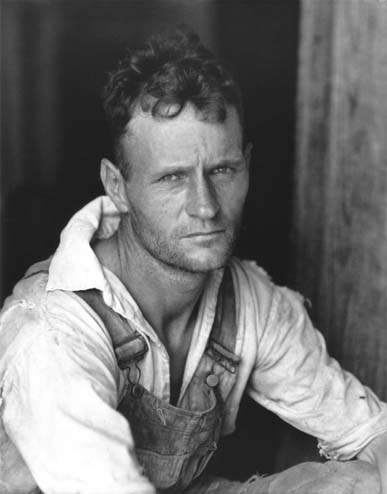
            http://www.aftersherrielevine.com/ .   Sherrie Levine rephotographed Walker Evans' photographs from the exhibition catalog "First and Last." In 2001 Michael Mandiberg scanned these same photographs, and created AfterWalkerEvans.com and AfterSherrieLevine.com to facilitate their dissemination as a comment on how we come to know information in this burgeoning digital age.  
Untitled (AfterSherrieLevine.com/1.jpg)
Michael Mandiberg, 3250px x 4250px (at 850dpi), 2001

     Her work is not about originality and  she doesn't hide the fact that her work wasn't original. As Chadwick stated;her work was an " act of  refusal: refusal of authorship, rejection of notions of self-expression, originality, or subjectivity" (384).
    Levine is best known for the work shown in "After Walker Evans", her 1980 solo exhibition at the Metro Pictures Gallery. The works consist of famous Walker Evans photographs, rephotographed by Levine out of an Evans exhibition catalog, and then presented as Levine's artwork with no manipulation of the images.
     Her style of rephotogarphing sent waves across the art world and posed challenges  to the male dominated art scene.
  Sherrie Levine, Small Krate Table: 1-6Sherrie Levine
Small Krate Table: 1-6
1993

Paula Cooper Gallery

Sherrie Levine, Parchment Knot 5Sherrie Levine
Parchment Knot 5
2003

Auction: Nov 11, 2013
Phillips New York
View Details | entire auction
Sherrie Levine, Equivalents: After Stieglitz 1- 18Sherrie Levine
Equivalents: After Stieglitz 1- 18
2006

Paula Cooper Gallery 
http://www.artnet.com/artists/sherrie-levine/


Work cited: www.aftersherrielevin.com
                  www.artnet.com
                  women and art by Whitney Chadwick

Tuesday, November 5, 2013

Cindy Sherman

Untitled courtesy of  http://blog.danpontingstudio.com
Cindy Sherman is an artist who emerged in the late 1970’s first as a performance artist then as a photographer. Sherman’s work challenges the stereotypes of society. Her first complete work Untitled Film Stills comment on women’s role that emerged in the 1950’s and 1960’s.  In later works she comments on the male “master/genius” artists. Her work comments on the role that these stereotypes play in our culture and in art while at the same time do not reveal the true Cindy Sherman.
Untitled courtesy of  svlstg.com
During this time Sherman’s work was wildly popular but more so it asserted her power over representation. As the photographer and model Sherman was able to depict herself however she imagined, in later work she uses readymade dolls in sexually charged scenes. Her control over the depiction and comments on social stereotypes is what is more controversial then the photos themselves. The Feminist Art movement of the early 70s allowed Sherman to play with gender roles and stereotypes, “enabling her to act out the psychoanalytic notion of femininity as a masquerade.”(WC 383)
Untitled Film Still #13. 1978.
Collection The Museum of Modern Art, New York.
Moma.org who owns the whole series writes “In the Untitled Film Stills there are no Cleopatras, no ladies on trains, no women of a certain age. There are, of course, no men. The sixty-nine solitary heroines map a particular constellation of fictional femininity that took hold in postwar America—the period of Sherman's youth, and the ground-zero of our contemporary mythology. In finding a form for her own sensibility, Sherman touched a sensitive nerve in the culture at large.” This nerve was connection over recognizing that particular stereotype depicted and moving away from that social construct via the Feminist Movement. (Let’s not forget the 80s bring in Reagan and his conservative ideas whomp whomp)
After the start of her career Sherman continued to push the societal limits. Her doll series uses prosthetic dolls positioned in sexual positions sometimes, grotesque positions challenging the viewers comfort level. The fairy tale and disasters series show fantastic and lurid imagery that one would not expect from happily ever afters. Each series has put Sherman in different narratives, currently she is doing a series on contemporary types of older women, specifically seen around NYC.       
           Sherman’s conceptual photography has influenced many artists in different genres. Her representations of women have influenced Madonna, Lady Gaga, there reinvention of themselves every week, to Lena Dunham, exploring the 20 something female stereotypes. Other female photographers have followed her lead in making themselves the subject and exploring psychological concepts, Nikki Lee, Narcissister, and Katy Grannan to name a few. Her exploration into the ‘types’ of females and their social constructs continue to influence females across the spectrum.
Untitled Film Still #84.
Collection The Museum of Modern Art, New York.


Work Cited:


Chadwick, Whitney. Women, Art and Society, Ed.
Thames and Hudson. New York, New York, 2007.print.

www.moma.org

Hunter, Jacobus, Wheeler. Modern Art, 3rd Edition
Prentice Hall. New York, New York, 2004.print


Women Painting Women?

    France in the 20th century, was a place where post-impression art changed the world. Of the many famous artist of this time, Marie-Clementine Valadon made one of the largest impacts through her drawing and paintings. Marie-Clementine Valadon, better known as Suzanne Valadon, changed the art world by her impact as a female artist. (Ronoir Fine Art) Born in 1865, Valadon started her career on the other side of the canvas as nude model. (ArtNet) She would model for Puvis de Chavannes, Pierre-Auguste Renoir, and Henri de Lautrec and it would be Lautrec who would first see her art work and encourage it, as well as the person who inform her that she should change her name. (ArtNet) During this time of modeling, she would be involved with many impressionist artist including Von Gogh and Pablo Picasso, which would impact her future work greatly. (Ronoir Fine Art) Suzzane was almost completely self taught, often learning by watch artist paint her. (ArtNet) However it is not her skills in painting, but her choice of subject of painting that explains why she is still so well discussed today. Chadwick, 282)


Suzzane Valadon


    A photo of Suzzane Valadon painting from www.aloj.us.es.


    "Valadon and Modersohn-Becker were two of the first women artist to work extensively with the nude female form" (Chadwick, 282) Suzzane Valadon subject of nude women, being painted by a woman was unheard of and most definitely unaccepted.  Her work would create such confusion for critics that Chadwick writes, "Confronted with Valadon's powerful nudes, critics were unable to sever Valadon (not a respectable middle-class woman) from her femininity and allowed her circulate as a pseudo-male, complete with 'masculine power' and 'virility'. "(282) The reason this confusion existed is explained by the ideas being carried over from the 19th century. Most critics still believed in separate spheres of artist and in them limitations of what they could paint or create. A woman was not thought to be able to create nudes, of males of females, as nudes where located in the man sphere. Valadon's shattering of this sphere made the critics search for an a way to explain this ,which Chadwick describes as the critics labeling her a "pseudo-male" (Chadwick, 282) It is important to acknowledge that Suzzane Valador was a woman who was consider an outcast for her open sexual life style in a time where women expressing anything sexual was considered unappropriated. It her life style did not set her back enough, she was a women trying not only to make art, which was still a challenge, but now doing so without training, money, and by choosing subjects that was considered out of a woman's sphere. Even with all these set backs, she painted pieces to push the feminist agenda and did so with work and talent that is still being discussed 50 years later.


Suzzane Valadon, The Blue Room, 1923


    As discussed below, notice how the work above from www.zazzle.com, demonstrates multiple of Suzzane Valadon's signature paintings. The first of which is the obvious fact the subject is female. Secondly the use of bright and strong colors as seen in the blue of the sheets and contrasting with the green stripes of the females pants.


     A major change that came from a female, such as Valadon, painting a nude is the new perspective the nudes are given. " The self-absorption and vitality of her subjects, for instance, are in stark opposition to the essential passivity of female nudes that until then had been the traditional manner of representation of womanhood." (Ronoir Fine Art) Valadon's subjects where not drawn to be ideal women, they were not created to give pleasure to the view or even highlight the more pleasing aspects of the body, they were drawn to accurate represent a specific moment or action. (Chadwick, 285) The reason she choose to use this different representation was in part because France at the end of the 19th century had a major backlash against anti-feminism, which was brought on by new fights over reproductive rights and the advancement of women's rights in general. (Chadwick, 286) Understanding these movements and their impact also allows one to understand why Valadon would not want to paint the models the way she herself had been painted and why she would want to promote realistic looking woman, in their realistic domestic environments. Some of the other characteristics of her art besides female nudes were bright and power colors which were likely inspired by hanging out with the many post-impressionist artist listed above. (Renoir Fine Art) These characters came together allow Valadon to create some both beautiful and powerful pieces of art.


Suzzane Valadon, Grandmother and Young Girl Stepping into the Bath, 1908


    The drawing above, found on www.studyblue.com, is an excellent example of what Suzzane Valadon's work is all about. It displays a female nude, in a domestic setting. It further shows a snapshot of the nude at an natural moment of a woman about to bathe. As the work is studied further notice how there is no connection with the nude, the viewer cannot even see her face, also how the woman's body is no a perfect model, but a realistic depiction including the flaws of the woman.


     To discuss the impact of Suzzane Valador, is to discuss the movement of feminism. The ability for women to be depicted as humans and not as objects had been in the works for many centuries, however it is not till Valador that the idea becomes realistic. Woman painting female nude was a major step for woman to be shown fairly in art and it is in part because of Valador that this takes place. A sentence that really drives home her value to art was in Renoir Fine Art which stated, "When Suzzane Valador died in 1938, many notable from the Parisian art community came to the funeral, including Pablo Picasso, Georges Braque, and Andre Derain" (Renoir Fine Art) For people as famous in art as Picasso to come to her funeral, there can be no question of how strong her impact was.

Bibliography

Chadwick, Whitney. Women, Art, and Society. New York, NY: Thames and Hudson, 1990. Print.
 
"Suzanne Valadon Biography." ArtNet. N.p., n.d. Web. 5 Nov. 2013.
 
"Suzanne Valadon." Suzanne Valadon. N.p., n.d. Web. 05 Nov. 2013.


Post 3: Anita Steckel

To summarize 20th century art is a difficult feat. Usually art historical periods can be marked by platitudes; however, there is only one general theme that applies to this century: change. Almost every cultural sector experienced exponential amounts of change in very short periods of time. Unprecedented destruction in World War I gave birth to one of the most remarkable genocides in World War II. It’s no wonder that social justice came to the forefront. In an art historical context, the woman artist could no longer be ignored. This increasing visibility culminated in the Feminist art movement. One artist, Anita Steckel, created work that was a tangible product of several art movements contextualized in a feminist perspective. 

"Bush Untitled" 

Monday, November 4, 2013

Post 3: Anna Mendieta

I decided to focus on the twentieth century female artist Anna Mendieta. She is a very fascinating artist. The thing about her that drew me into wanting to base my presentation on her was that she is of Hispanic decent, she was Cuban. She has a very unique, personality- wise and her story is amazing and I strongly believe that her life experiences had an impact on the way she performed and expressed herself through her artwork.

File:Ana Mendieta Untitled (Facial Hair Transplants) 1972.jpg

Untitled (Facial Hair Transplants), 1972
 Examines the boundary of what is typical to men and women. The theme of gender is very prevalent in this piece. Anna is going against the norm and what is expected and is challenging the innate behaviors in regards to gender.

http://upload.wikimedia.org/wikipedia/en/9/93/Ana_Mendieta_Untitled_%28Facial_Hair_Transplants%29_1972.jpg


Anna was very interesting. If the art world had a Lady Gaga she would be it. She is very "out there" so to speak. She was not afraid to stretch the boundaries. She would use her own body in her artwork as well as blood to get her point across.


In this painting Anna ties herself to the table and smears her body in blood. This was inspired by the brutal rape of a nursing student.

https://blogger.googleusercontent.com/img/b/R29vZ2xl/AVvXsEgnzxik1qh4reMYGnTBCz6AP_jkH2FUKs0Ta1lHa_C9yje1b0jJ6rkk5Fe2kGlwQ7bhgweumRfgp4WbX6DcsDp4NVt9PkBXbsCpKwkOh8F6AcAufoWPHdsqYSQeo_3d0Nt1TkAoyYwjaWgm/s1600/kc_femart_mendiet_69.jpg


Anna Mendieta grew up in Cuba  and she and her sister were exiled from the country by her parents in order to help them escape from Castro. Anna and her sister were constantly switched from foster homes in Iowa until she was finally reunited with her parents. Good thing that she was reunited with her parents but, that certainly must of had a negative effect on her as she grew up and processed everything. It certainly influenced her art. She was known to make ritualistic performances in which she inscribed her own body in nature. Blood, fire, water, and other natural elements are essential to her highly personal and often mysterious vocabulary (eai.org).

The significance of religion being in her artwork could have had something to do wit her and her sister being moved through foster homes through an arrangement of the United States government  and the Catholic Charities. The things that were also transpiring in her home country also could have influenced her work. Chadwick states, "working from a different cultural perspectives that displaced Cuban living in the United States Anna Mendieta (1948-85) first used blood in a 1973 performance protesting against rape. Mendieta's artistic roots lay in feminism and in the anti-commodification tendencies of earth, performance, and process work in the 1970's. Subsequently, she began imposing the traces of her five-foot body on earth in the environs of Iowa City, Iowa, Oaxaca, Mexico, and other sites, outlining it with ignited gunpowder, stones, flowers, and firework or having herself bound in strips of cloth and buried in mud and rocks (Chadwick 373).

The painting of the artist that I am focusing on is called Untitled (Silueta Series). It is a picture of her body imprinted in the ground in what appears to be a beach. You could compare it to making snow angels but without the snow obviously. Untitled which is part of the Silueta series depicted the creation of a female Silhouette imprinted on the ground. Anna Mendieta's medium was to create the female silhouette using nature as both her canvas and silhouette. She combined land art with body art to create "earth body." The piece Untitled could represent the thought of all of humanity being dust and how we eventually will return to the Earth. Putting it into a religious context since she obviously was inspired by her religion which Guerrilla Girls' points out to have been Santeria, a Caribbean and Brazilian mixture of Catholic rites (Guerrilla Girls 89). Guerrilla Girls points out how she felt a connection to this belief.


Anna Mendieta
Untitled (Silueta Series) 1977

In this piece Anna has her body imprinted in the sand possibly trying to depict the fact that all humanity is dust and to dust we will all return.

http://images.tate.org.uk/sites/default/files/styles/grid-normal-8-cols/public/images/ana_menieta_untitled_tp11.jpg?itok=EGU7AZJI


Chadwick points out that Anna Mendieta's work made powerful identifications between the female body and the land in ways that annihilated the conventions of surface on which the traditions of western art rest. Only traces of the mediated interactions between body and art remained. Work in landscape often intersected with a desire by women artist to work in public places in order to affect the lives of people outside the closed confines of the art gallery and museum world. The imagery for many public art and performances, evolved in dialogue with local people to produce a socially concerned and visually strong art (Chadwick 373-379).

In conclusion, Anna Mendieta was a really fascinating artist. Her uniqueness and different approach is something to admire. She was not afraid to be "out there." She has a couple of work that is just refereed to as Untitled but what is interesting about it is that she is probably letting a person perceive her artwork as what they believe it is. 


Works Cited:

Chadwick, Whitney. Women, Art and Society, Ed.
Thames and Hudson. New York, New York, 2007.print.

Girls, Guerilla. The Guerilla Girls’ Bedside Companion to the History of Western Art,

 New York: La Guardia Place, 1998.print.

www.eai.org/artistBio.htm?id=373